
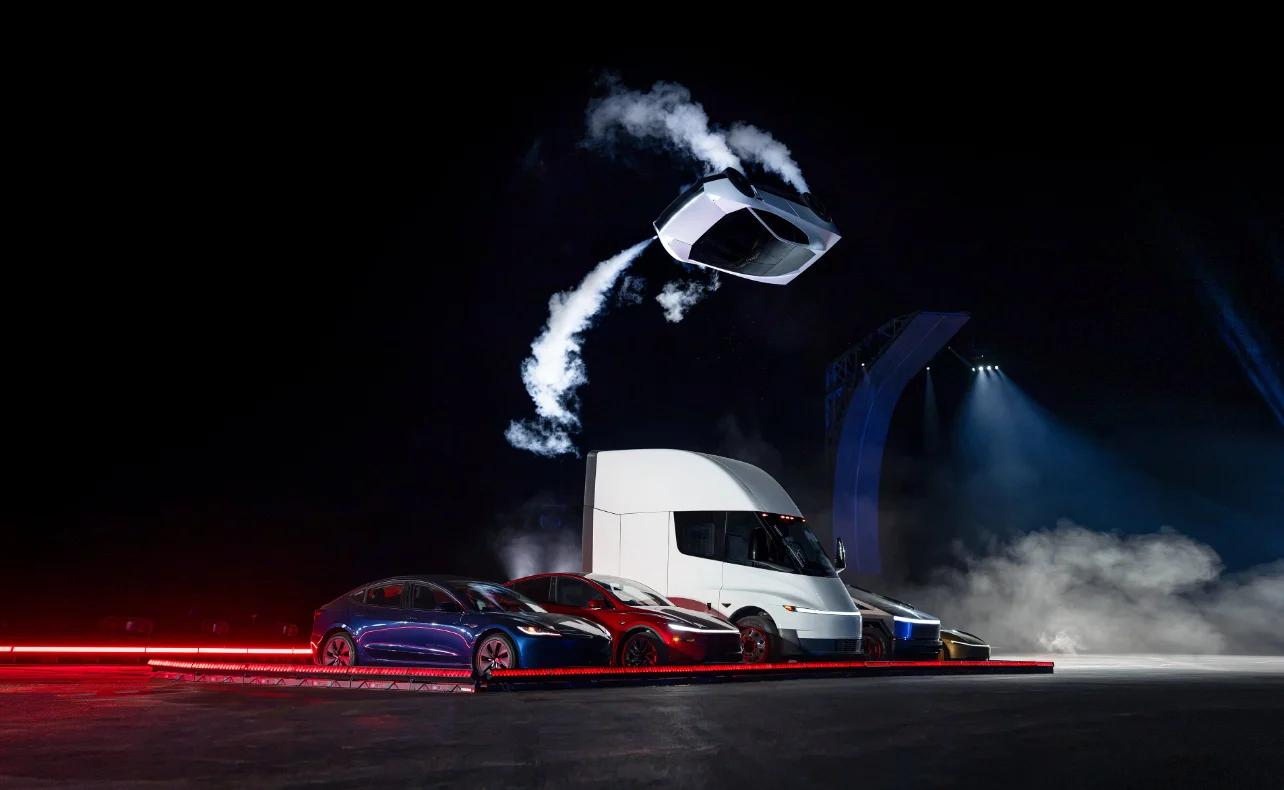
We spent decades imagining flying cars. Tesla apparently decided the missing ingredient was giving a sports car the ability to do gymnastics. Your insurance company would like a quiet word.
On October 15, Tesla revealed its redesigned next-generation Roadster at SpaceX's testing facility in McGregor, Texas. Nearly nine years after the previous unveiling, the company finally had something new to show. It also had a ramp that suggested somebody had taken the toy-car aisle very seriously.
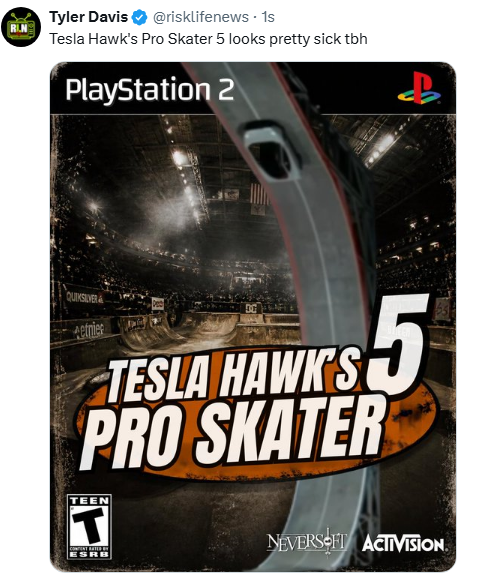
During the demonstration, a prototype climbed a curved structure until it was upside down, left the ramp, rotated in the air and landed on its wheels. Car and Driver reported the maneuver from the event; Tesla's official replay includes the ramp demonstration and a separate airborne stunt over parked vehicles. This was a controlled prototype spectacle. Nobody has demonstrated your future commute over gridlocked traffic.
 VIEW FULL-SIZE POST ↗
 VIEW FULL-SIZE POST ↗
 VIEW FULL-SIZE POST ↗
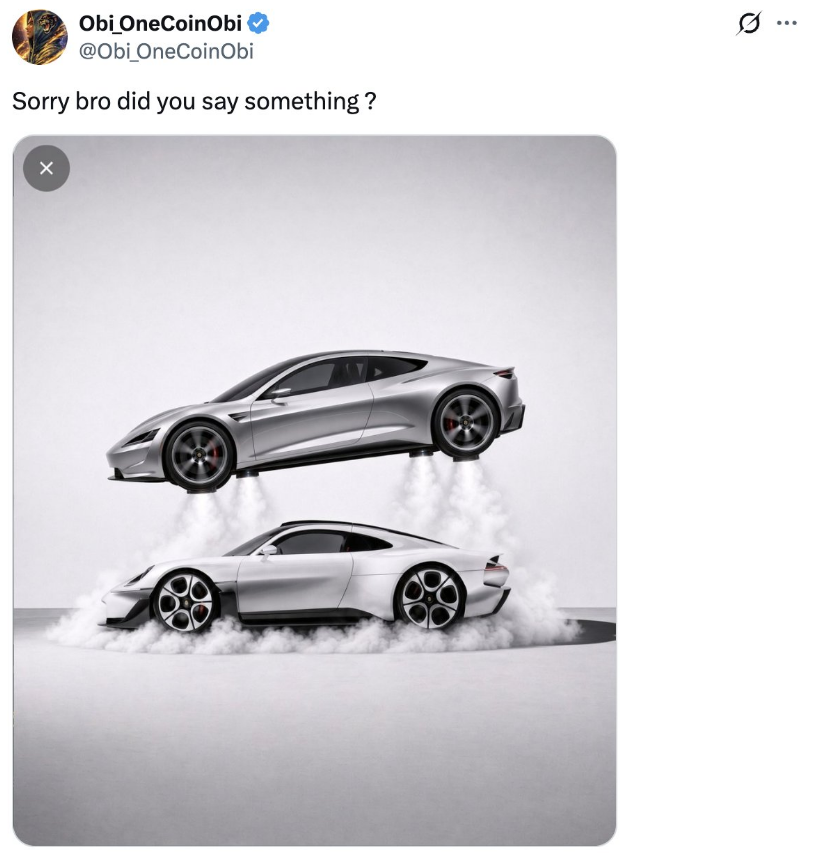
The engineering involves two different tricks. Tesla says powered fans pull air from beneath the car, while a sealing system helps produce the suction needed to hold it against a surface, even upside down. Cold-gas thrusters provide the thrust used for aerial movement and stabilization.
 VIEW FULL-SIZE POST ↗
Those thrusters use compressed air stored at very high pressure. They are not fuel-burning rocket engines. Musk said the car could replenish its air supply itself, though the presentation did not establish a practical recharge timetable. The concept is wonderfully excessive: an electric sports car that occasionally needs to catch its breath.
 VIEW FULL-SIZE POST ↗
The acceleration claims are similarly unsubtle. Tesla announced a 0–60 mph result of 0.81 seconds during the event and said the production car could improve on it. Musk also claimed a top speed above 230 mph. These are company-reported figures, not independently verified performance results.
 VIEW FULL-SIZE POST ↗
There is important small print beneath the airborne sales pitch. Tesla lists three configurations:
- Performance: two seats, active aerodynamics and the suction system.
- Thrust: two seats and rear cold-gas thrusters, with a claimed sub-second 0–60 time.
- Rocket: one seat, perimeter-mounted thrusters and the flight capability, offered by invitation only.
Tesla explicitly says Rocket is "Not approved for public road use." Buying the wildest version would therefore not amount to permission to barrel-roll through a roundabout.
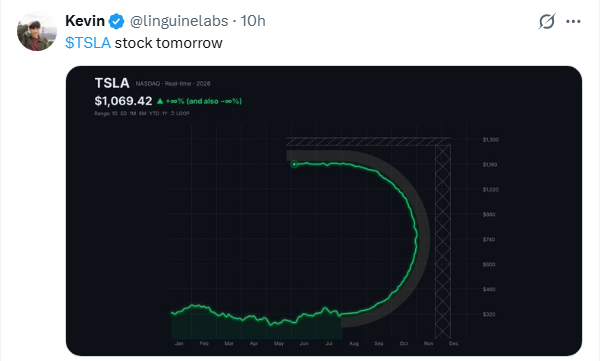
Musk put production in 2028. That remains a target, particularly for a vehicle first shown in 2017 with deliveries originally promised for 2020. No new final vehicle price was announced at the event. Independent testing, final production specifications and the practical limits of repeated thruster use all remain important questions.
Still, there is something refreshing about engineers building a machine this gloriously unnecessary. The Roadster has supplied an excellent answer to "Where's my flying car?" The next question is whether it can make the considerably less spectacular journey from demonstration pad to customer delivery.
For now, the car can leave the ground. The delivery date would benefit from staying firmly attached to it.
Sources and documents
Details can change. Review the linked sources and dated evidence alongside this report.
- Tesla's current Roadster specifications and trim descriptions (opens in a new tab)
- Tesla's October 15 Roadster event post and replay (opens in a new tab)
- Tesla's full Roadster event replay on YouTube (opens in a new tab)
- Car and Driver's report from the presentation (opens in a new tab)
- The Drive's event report and 0–60 mph figure (opens in a new tab)
- TechCrunch's reporting on the demonstration and 2028 target (opens in a new tab)
- Reuters report on Tesla's Roadster presentation, via The Spokesman-Review (opens in a new tab)