Welcome to the Financialization of Absolutely Everything
There was a time when trading meant buying stocks, selling futures, or gambling your life savings on weekly options.
Simpler times.
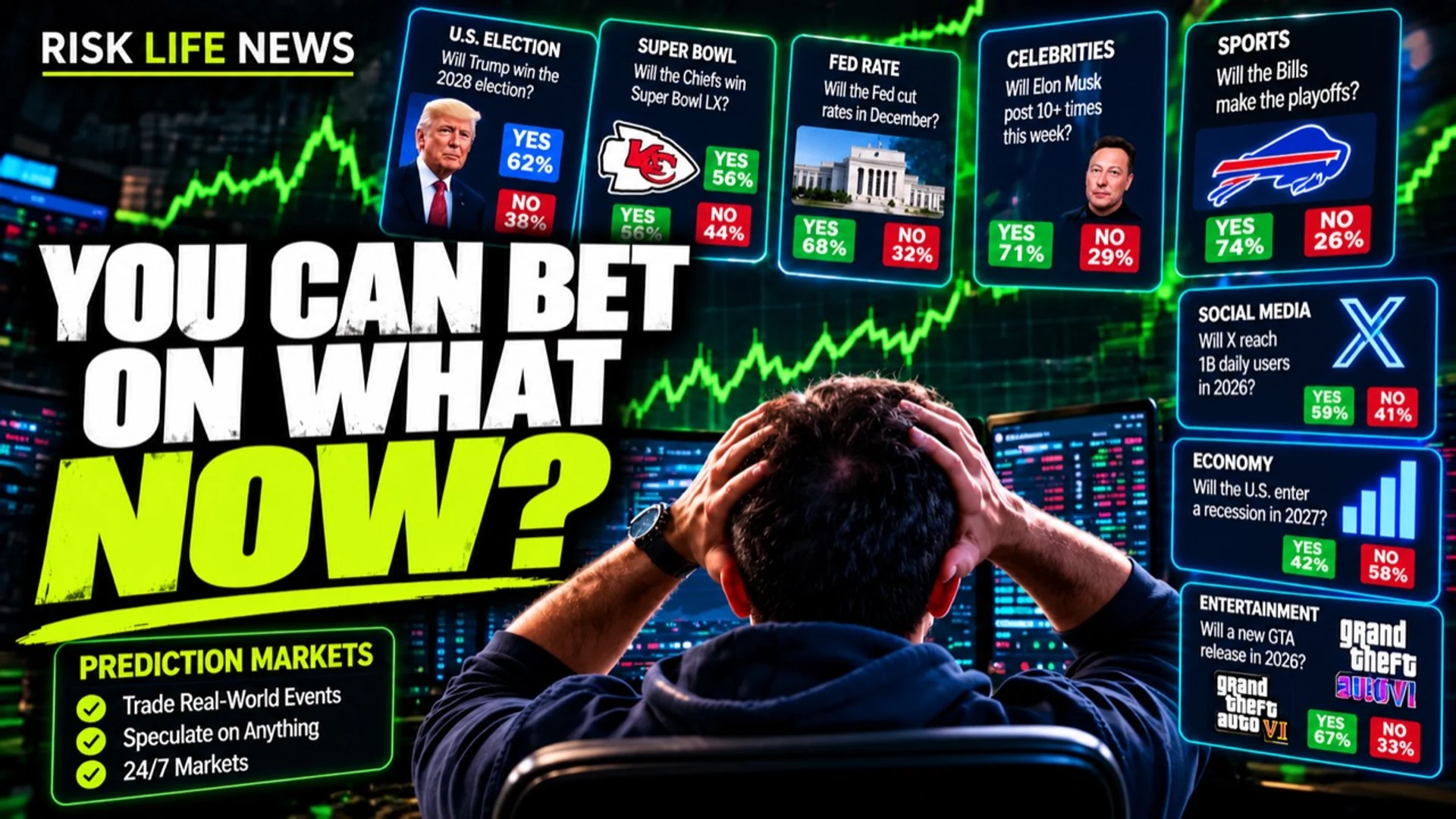
Now you can speculate on presidential elections, interest rate decisions, football games, celebrity appearances, and how many times Elon Musk is going to post on X.
Yes, that's a real market.
We've officially reached the point where the financial markets are starting to look like a sportsbook with a Bloomberg Terminal.
And apparently, people fucking love it.
According to a September report from Pew Research Center, combined monthly trading volume on Kalshi and Polymarket more than doubled between May and July 2026, climbing from approximately $26 billion to $53 billion.
That's trading volume, not necessarily the amount of new money deposited or lost. But it's still an extraordinary amount of activity for an industry that was barely on most retail traders' radar a few years ago.
So what's actually happening here?
Are prediction markets becoming one of the most useful financial innovations in years?
Or have we simply figured out how to put a trading interface on absolutely everything?
First, What the Hell Is a Prediction Market?
The concept is surprisingly simple.
Platforms like Kalshi and Polymarket let participants trade contracts tied to the outcome of real-world events.
Let's say there's a contract asking whether the Federal Reserve will cut interest rates at its next meeting.
If a YES contract costs $0.65 and pays $1 if the event happens, the market is pricing that outcome at roughly a 65% implied probability.
If you're right and hold through settlement, you receive $1 per winning contract. If you're wrong, the contract generally expires worthless.
You can also potentially sell your position before the event settles, depending on market conditions.
Of course, fees, spreads, and liquidity matter. A contract trading at $0.65 doesn't mean there's some magical 65% guarantee that the event will happen.
It means that's approximately what traders are willing to pay.
And increasingly, they're willing to trade on just about anything.
From Football Parlays to Presidential Elections
I've personally messed around with some football parlays through Robinhood's prediction markets.
The experience was solid.
The interface was easy to use, placing the trades was straightforward, and it felt pretty similar to using a traditional sports betting app.
Which raises an interesting question.
At what point does trading become gambling?
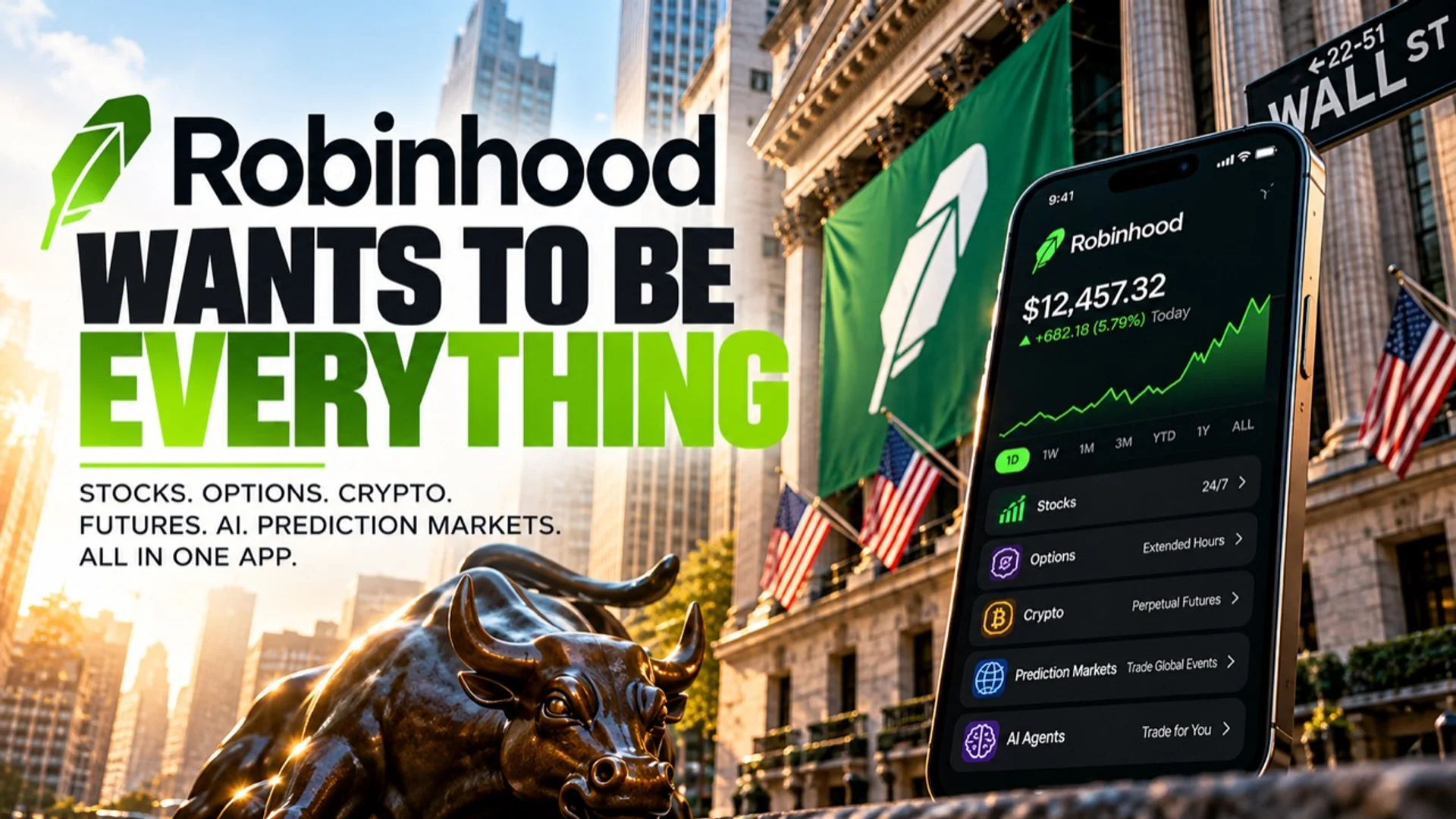
Robinhood has been aggressively expanding its prediction market offerings.
In September, the company announced additional football event contracts, custom combinations, new exchange partnerships, and expanded election markets ahead of the November midterms.
Robinhood also reported that 13.6 billion event contracts traded through its platform during the second quarter of 2026 alone.
That's a company-reported contract count, not a dollar-volume figure, but it shows just how aggressively this business is growing.
And Robinhood isn't alone.
Kalshi and Polymarket have become major players in an industry increasingly competing for the same customers as traditional sportsbooks.
During the 2026 World Cup, H2 Gambling Capital estimated that prediction market activity represented approximately 27% of legal U.S. sports-betting volume, compared with roughly 9% at the beginning of the year.
The comparison isn't exact because the platforms measure activity differently, but the trend is hard to ignore.
Prediction markets are becoming serious competition.
But Here's Where Things Get Ridiculous
Want to speculate on the Federal Reserve?
Sure. That makes sense.
Want to trade the outcome of an election?
Okay, there's arguably some useful forecasting information there.
But what about predicting how many times Elon Musk will post on X in a week?
That's an actual category of contracts.
An October 2026 Polymarket market tracked the number of Musk's posts between October 2 and October 9, attracting hundreds of thousands of dollars in reported trading activity.
Apparently, we've reached a point where counting a billionaire's social media posts is a financial activity.
And it gets better.
During the 2026 Super Bowl halftime show, prediction markets offered contracts on whether certain celebrities would perform.
Cardi B appeared during the show, but her participation created a dispute over what actually counted as a performance.
Kalshi and Polymarket handled the outcome differently, with Kalshi invoking its ambiguity procedures and Polymarket initially resolving its contract in favor of YES.
We're talking about millions of dollars in trading activity tied to whether a celebrity's appearance satisfied the precise wording of a contract.
Imagine explaining that to your grandfather.
"Yeah, Grandpa, I lost $400 because Cardi B was onstage, but apparently she didn't technically perform."
That's where we are.
The Argument That Prediction Markets Are Actually Useful
Here's the thing.
Despite how ridiculous some of these markets sound, there's a legitimate argument that prediction markets can provide valuable information.
Traditional forecasts often rely on polls, expert opinions, economic models, or historical data.
Prediction markets add something different.
People are putting actual money behind their predictions.
In theory, that creates an incentive to gather information, challenge conventional wisdom, and identify probabilities that other participants may be mispricing.
Markets tied to inflation reports, Federal Reserve decisions, elections, and economic outcomes could potentially provide useful real-time signals.
But there's a catch.
Just because people are risking money doesn't mean they're informed.
A market can be wrong.
A market can be manipulated.
And a market with poor liquidity can produce prices that look precise without being particularly meaningful.
There's also the possibility that some participants know information the rest of the market doesn't.
Which brings us to another problem.
What Happens When Someone Already Knows the Answer?
Imagine a prediction market asking whether a particular athlete will sign with a specific team.
Now imagine being that athlete's agent.
Or their manager.
Or someone sitting in the room when the contract gets signed.
Suddenly, you aren't really predicting anything.
You might already know the answer.
This isn't just a hypothetical concern.
During the summer, prediction markets tied to LeBron James's next team drew considerable attention and trading activity.
That raised questions about who might possess advance knowledge of a decision that only a relatively small group of people could influence or know before the public.
Traditional financial markets have extensive rules governing material nonpublic information.
Prediction markets are still wrestling with how comparable protections should apply across sports, politics, entertainment, and other real-world events.
And the legal situation is becoming increasingly complicated.
Wall Street Says Trading. States Say Gambling.
One of the biggest battles surrounding prediction markets has nothing to do with whether traders are making money.
It's about who gets to regulate them.
Prediction market operators argue that federally regulated event contracts fall under the authority of the Commodity Futures Trading Commission.
Several states argue that sports-related contracts function like gambling products and should be subject to state gaming laws.
In September, a federal appeals court held that federal commodities law did not preempt Ohio and Tennessee's gambling laws as applied to Kalshi's sports contracts. The cases were sent back to the lower courts.
Other courts have reached different conclusions, creating a growing legal conflict.
And now the NFL has entered the conversation.
On October 8, the league urged the U.S. Supreme Court to clarify the regulatory framework, supporting arguments that states should retain authority over sports-related prediction markets.
The league has raised concerns about game integrity, consumer protections, and the ability of federal regulators to oversee sports-related trading activity.
This isn't some minor disagreement.
It's a fundamental argument about what prediction markets actually are.
Financial exchanges?
Sportsbooks?
Something entirely new?
The answer could determine how the industry operates for years.
So Is This Trading or Gambling?
Here's how I look at it.
If I buy an SPX call because I think inflation is going to come in lower than expected, I'm making a financial prediction.
If I buy a prediction market contract because I think inflation is going to come in lower than expected, I'm also making a financial prediction.
The products have different structures, risks, and regulatory treatment.
But the underlying behavior isn't necessarily all that different.
I'm risking money because I believe something is going to happen.
Now replace the inflation report with a football game.
Or a celebrity appearance.
Or the number of times Elon Musk posts on social media.
At some point, the line between trading and gambling starts getting pretty damn blurry.
And I don't think changing the terminology automatically changes the underlying risk.
Calling something an event contract instead of a bet doesn't magically make it a sophisticated investment strategy.
But calling every prediction market gambling also ignores the potential value of markets that aggregate information about important economic and political events.
Both things can be true.
My Take: This Industry Is Just Getting Started
I think prediction markets are fascinating.
I also think they're going to create some absolutely ridiculous situations.
There are legitimate opportunities for better forecasting, more accessible markets, and new ways to express opinions about future events.
There's also enormous potential for uninformed speculation, questionable incentives, and people losing money on things they probably shouldn't be trading in the first place.
Personally, I've enjoyed the limited experience I've had using Robinhood's football prediction markets.
But I don't think having a good user experience answers the bigger questions about the industry.
The growth is real.
The regulatory uncertainty is real.
And the financialization of practically everything is happening right in front of us.
Prediction markets might become one of the most useful forecasting tools we've ever created.
They might also become the world's largest collection of people confidently betting money on things they know absolutely nothing about.
And knowing the internet, there's a pretty good chance both things happen simultaneously.
Sources and documents
Details can change. Review the linked sources and dated evidence alongside this report.
- Pew Research Center, prediction market trading volumes and methodology (opens in a new tab)
- Robinhood, September 2026 prediction markets expansion and Q2 contract count (opens in a new tab)
- Fortune, H2 Gambling Capital World Cup estimate (opens in a new tab)
- Polymarket, October 2 to 9 Elon Musk post-count market (opens in a new tab)
- Associated Press via Fortune, Cardi B halftime-show contract dispute (opens in a new tab)
- Kalshi, LeBron James next-team market coverage (opens in a new tab)
- U.S. Court of Appeals for the Sixth Circuit, Kalshi v. Schuler and Orgel (opens in a new tab)
- U.S. Supreme Court docket 26-299, NFL amicus brief (opens in a new tab)