Earnings season is back, and Wall Street's biggest banks are first in the interrogation room.
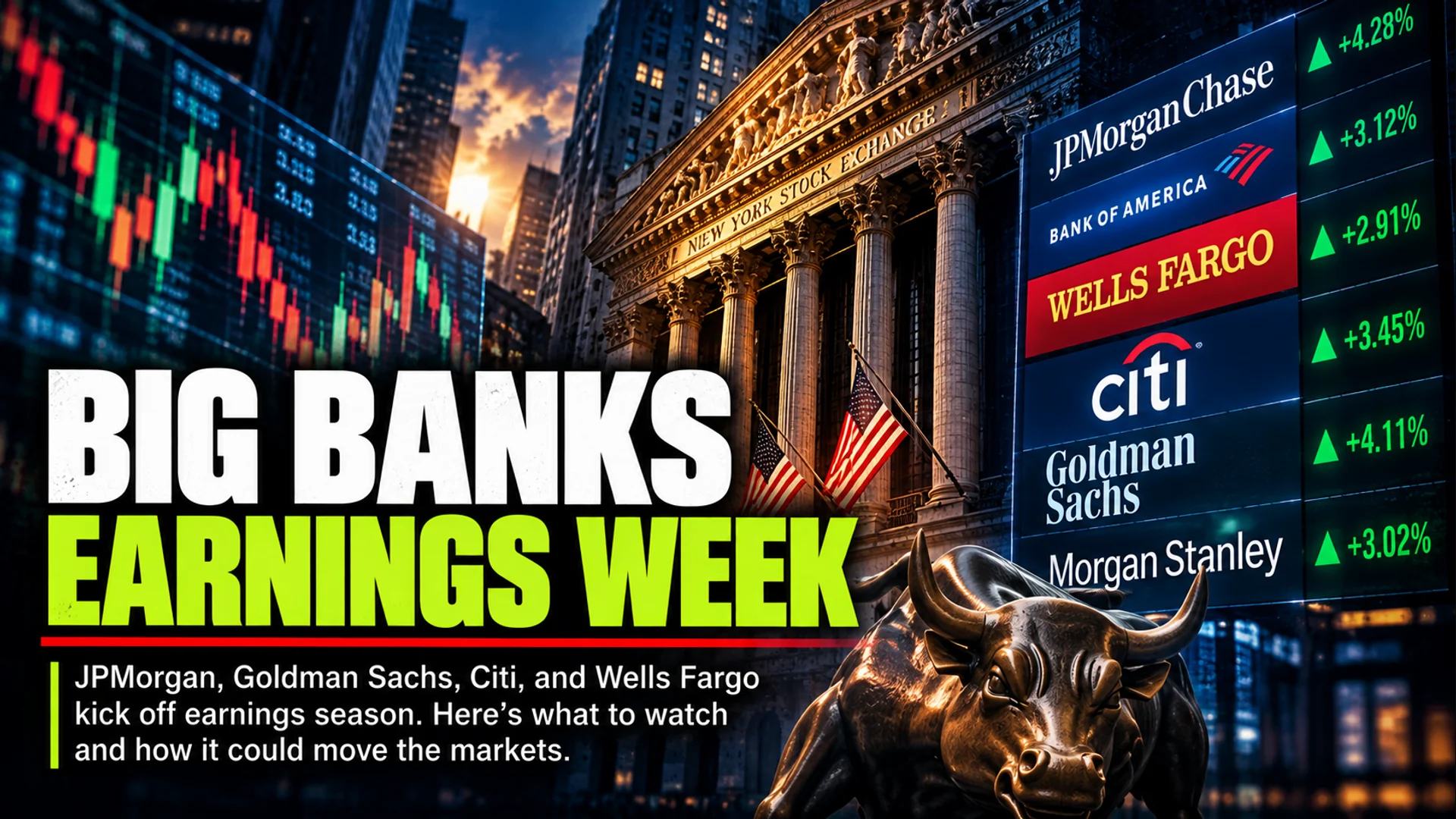
JPMorgan Chase, Citigroup, Goldman Sachs, and Wells Fargo released third-quarter results on Tuesday, October 13. Their official earnings releases are linked below. The next scheduled wave includes Bank of America, Morgan Stanley, and BlackRock on Wednesday, October 14.
Bank of America expects to release results at about 6:45 a.m. ET on Wednesday, Morgan Stanley at about 7:30 a.m. ET, and BlackRock before its 7:30 a.m. ET call.
Investors are looking beyond whether these companies beat earnings estimates.
They are looking for evidence of how interest rates, borrowing costs, and broader financial conditions are affecting the real economy.
Why banks matter beyond their stock prices
Banks sit at the center of the financial system.
When businesses need capital, consumers need mortgages, or investors want to finance major transactions, banks are frequently involved.
That makes their quarterly results a useful window into economic activity.
Three areas deserve particular attention.
Net interest income: Higher interest rates can increase what banks earn on loans, but funding costs and weaker loan demand can offset those benefits.
Credit quality: Rising delinquencies or larger loan-loss provisions could suggest financial pressure is building among borrowers.
Investment banking and trading: Capital-market activity, dealmaking, and trading revenue can provide clues about corporate confidence and market conditions.
Why expectations matter
Earnings season isn't simply about whether companies are profitable.
It's about whether their results exceed or disappoint the expectations already reflected in stock prices.
A company can report strong year-over-year growth and still see its shares decline if investors expected even more.
Forward guidance can matter just as much as the quarter that has already ended.
Management commentary about lending activity, consumer finances, corporate investment, and credit quality could influence sentiment across the financial sector.
What traders should watch
Keep JPM, BAC, C, WFC, GS, MS, and the financial-sector ETF XLF on the radar.
Strong bank results could support the broader market, particularly if executives describe healthy consumers and manageable credit losses.
Weak guidance could revive concerns that borrowing costs are beginning to weigh on economic activity.
Financial-sector performance may also influence sentiment toward the major equity indexes.
The RLN take
Forget the ceremonial earnings beat.
A company can beat Wall Street's estimates and still get absolutely demolished if management says something investors don't want to hear.
Bottom line: The banks have begun giving investors an early report card on the economy, and their outlook may matter more than their quarterly profits.
Sources and documents
Details can change. Review the linked sources and dated evidence alongside this report.
- JPMorgan Chase third-quarter 2026 results (opens in a new tab)
- Citi third-quarter 2026 results (opens in a new tab)
- Goldman Sachs third-quarter 2026 results (opens in a new tab)
- Wells Fargo third-quarter 2026 results (opens in a new tab)
- JPMorganChase third-quarter earnings announcement (opens in a new tab)
- Citi earnings events (opens in a new tab)
- Wells Fargo quarterly earnings schedule (opens in a new tab)
- Goldman Sachs 2026 reporting dates (opens in a new tab)
- Bank of America third-quarter reporting announcement (opens in a new tab)
- Morgan Stanley third-quarter earnings call (opens in a new tab)
- BlackRock third-quarter reporting announcement (opens in a new tab)