While stock traders obsess over earnings reports and the next inflation print, another story is developing in the background.
The U.S. bond market is sending a message.
And it's getting harder to ignore.
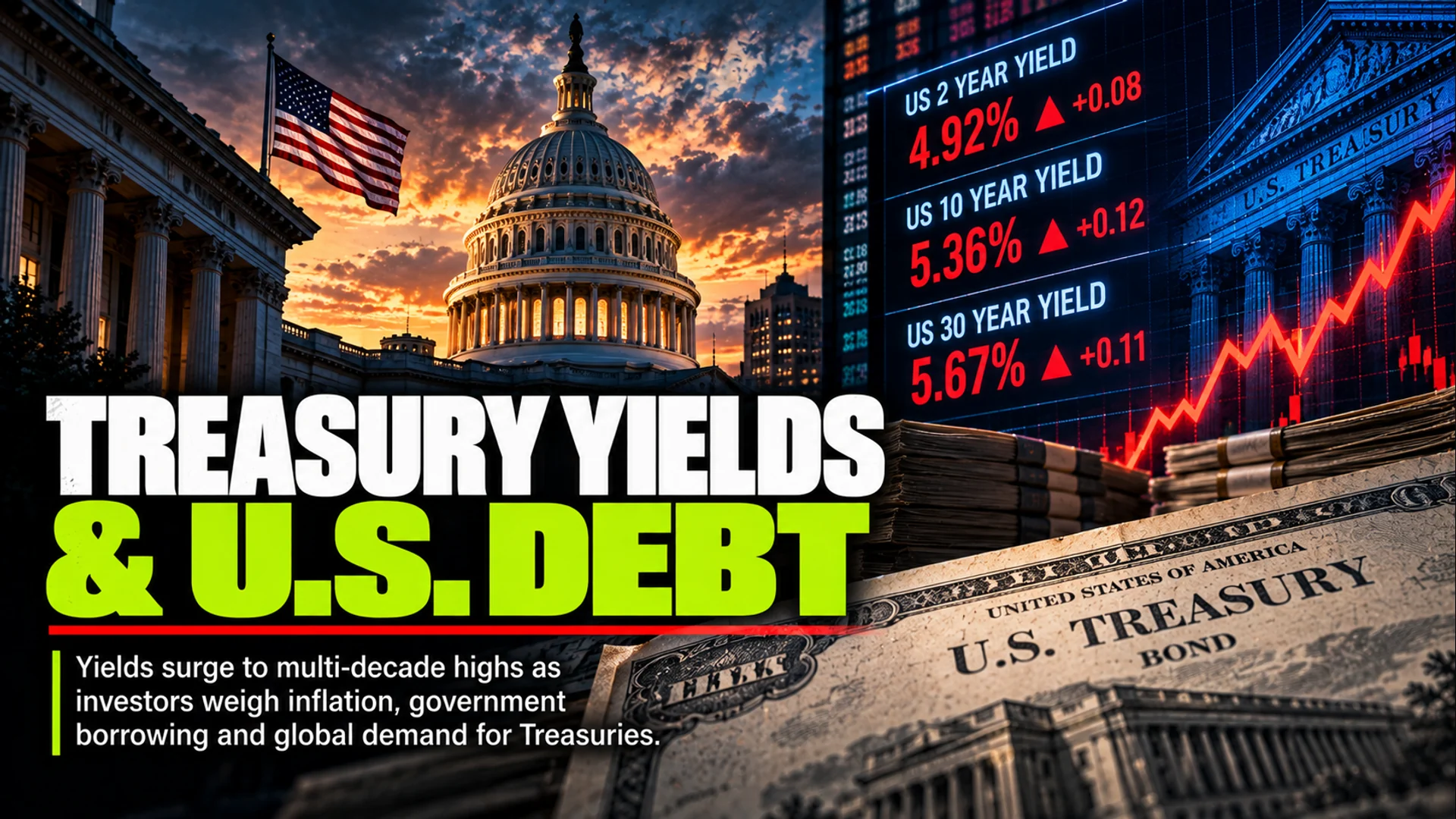
As of the latest published Treasury curve on Friday, October 9, the 2-year yield was 4.80%, the 10-year yield was 5.24%, and the 30-year yield was 5.60%. Those dated official par yields differ from the illustrative numbers printed in this article's cover. Treasury yields remain a critical variable for investors trying to understand borrowing costs, equity valuations, and the government's financing needs.
Changes in long-term yields can influence everything from mortgage rates to the price investors are willing to pay for technology stocks.
Why Treasury yields matter
U.S. Treasury securities are among the world's most important financial benchmarks.
Their yields influence mortgage rates, corporate borrowing costs, bond valuations, and the discount rates investors use to value stocks.
When Treasury yields rise sharply, investors can earn more from government debt.
That can make expensive equities less attractive, particularly companies whose valuations depend heavily on profits expected far into the future.
Higher yields also raise financing costs for businesses and households.
The debt problem
The federal government must continually finance existing obligations and new spending through taxes and borrowing.
When interest rates rise, refinancing maturing debt can become more expensive.
That creates a difficult cycle: higher borrowing costs can increase interest expenses, adding pressure to future federal budgets.
But rising yields aren't automatically evidence that investors have lost confidence in U.S. government debt.
Inflation expectations, Federal Reserve policy, economic growth, and the supply of bonds all influence yields.
Treasury auctions matter
The U.S. Treasury regularly auctions securities to finance government operations and refinance maturing obligations.
Auction demand provides one indicator of investors' willingness to purchase government debt at prevailing yields.
Strong demand can help stabilize yields, while weaker-than-expected demand may contribute to upward pressure.
However, one auction alone does not establish a lasting trend.
Investors may demand higher yields without abandoning Treasuries altogether.
That distinction matters.
What traders should watch
The 10-year and 30-year Treasury yields should remain on the radar, particularly around major inflation reports and Treasury auctions.
If inflation surprises to the upside, longer-term yields could face renewed upward pressure.
If inflation cools and Treasury demand remains strong, yields could stabilize or retreat.
For equity traders, watch whether technology stocks, small caps, and interest-rate-sensitive sectors respond to changes in bond yields.
The RLN take
The United States has a debt problem that isn't going to be solved by one good Treasury auction, one Fed meeting, or a politician promising to fix everything.
Shocking, we know.
But traders should distinguish between a long-term fiscal challenge and an immediate market crisis.
Bottom line: The bond market is one of the most important charts to watch this week, even if you've never traded a Treasury contract in your life.
Sources and documents
Details can change. Review the linked sources and dated evidence alongside this report.