
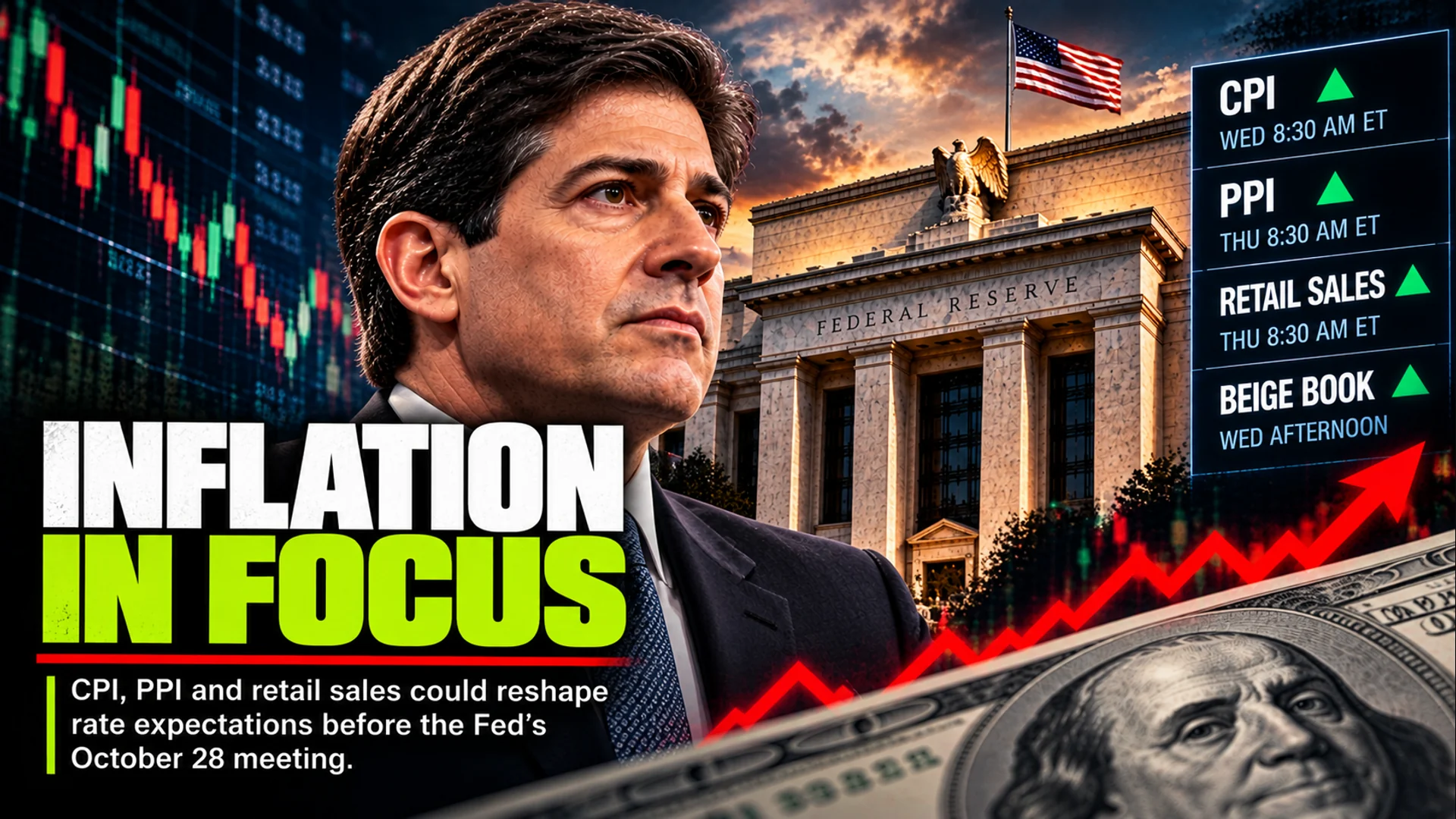
Wall Street is heading into a week where two inflation reports could do more to move markets than a dozen Federal Reserve speeches.
The Federal Reserve isn't scheduled to announce its next interest-rate decision until October 28. But traders won't have to wait that long for a potential shake-up.
The Bureau of Labor Statistics has scheduled September's Consumer Price Index (CPI) for Wednesday, October 14, at 8:30 a.m. ET, and the Producer Price Index (PPI) for Thursday, October 15, at 8:30 a.m. ET. The Census Bureau has scheduled September retail sales for Thursday at 8:30 a.m. ET.
These releases are expected to provide investors with a clearer picture of inflation pressures and consumer demand heading into the Fed's next meeting.
Why inflation matters right now
The Federal Reserve faces a familiar problem: keeping inflation under control without putting unnecessary pressure on economic growth.
Higher-than-expected inflation could reduce expectations for near-term rate cuts, pushing Treasury yields higher and putting pressure on stocks.
Softer inflation could have the opposite effect, particularly if investors believe the economy is slowing gradually rather than heading toward a recession.
But there's a catch.
If inflation cools while consumer spending deteriorates sharply, the market may start worrying about growth instead of celebrating lower prices.
Sometimes Wall Street gets exactly what it asked for and decides it doesn't like it anyway.
What traders should watch
The first reaction to major inflation surprises often shows up in Treasury yields, the U.S. dollar, and equity-index futures.
Technology and other growth stocks can be especially sensitive to changes in interest-rate expectations because higher discount rates reduce the present value investors assign to future earnings.
Meanwhile, retail sales figures offer another perspective on whether consumers are still spending despite elevated borrowing costs.
The Federal Reserve's Beige Book is scheduled for Wednesday, October 14, at 2 p.m. ET, adding regional economic context from businesses and Fed districts.
The RLN take
This is not a week to get emotionally attached to a market prediction before the numbers arrive.
A CPI surprise can change the entire conversation in seconds.
Bottom line: Inflation data, rather than an actual Fed decision this week, is the primary monetary-policy catalyst traders should be watching.
Sources and documents
Details can change. Review the linked sources and dated evidence alongside this report.